What the choices actually look like.
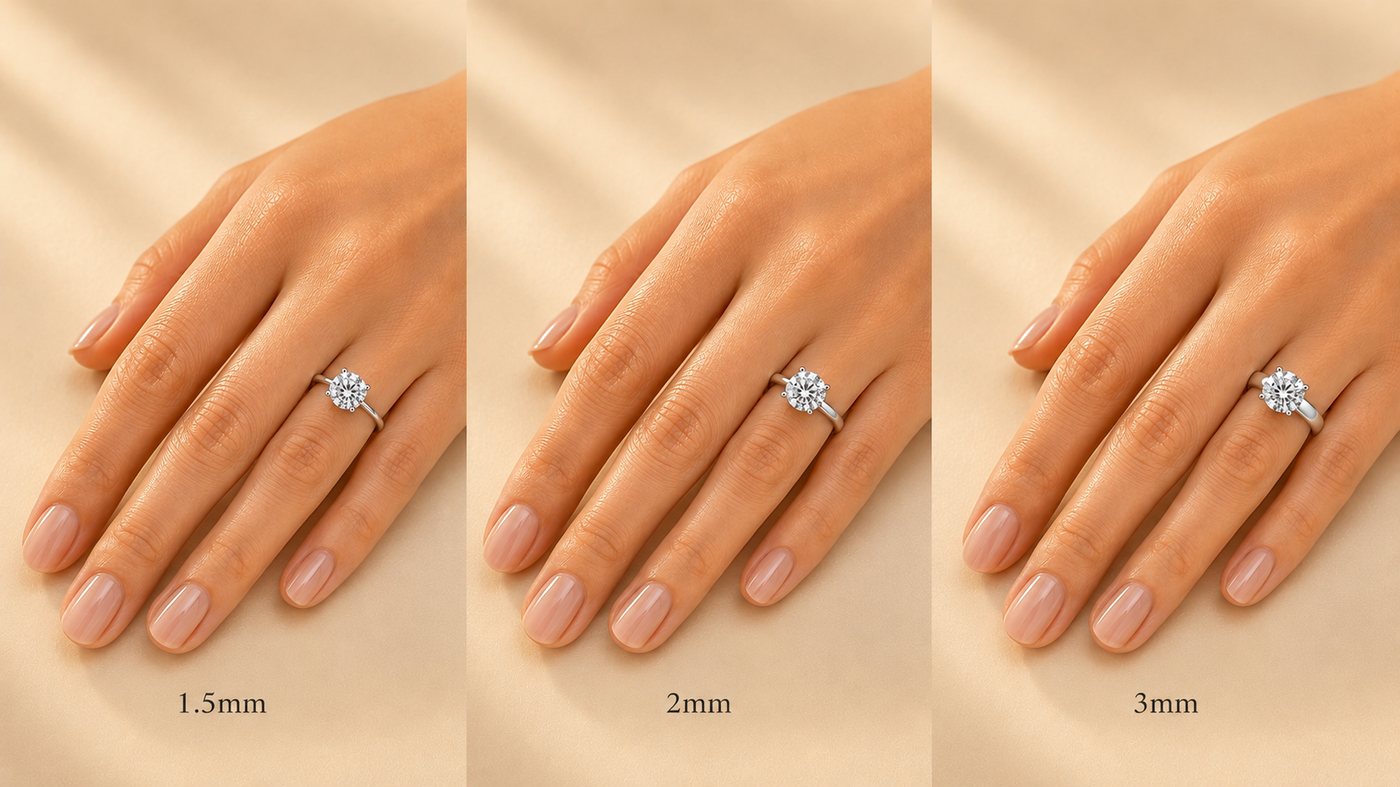
Band width and metal, shown at scale. Two decisions usually explained in millimetres and names that mean very little until you see them on a hand. Carat, colour and clarity figures are being reworked and will join them here.
A millimetre is not nothing.
Width is the decision people give least thought to and notice most, because it is the part actually touching you all day. A fine band disappears on the hand. A broad one is a piece of jewellery you are aware of wearing, which is sometimes exactly the point.
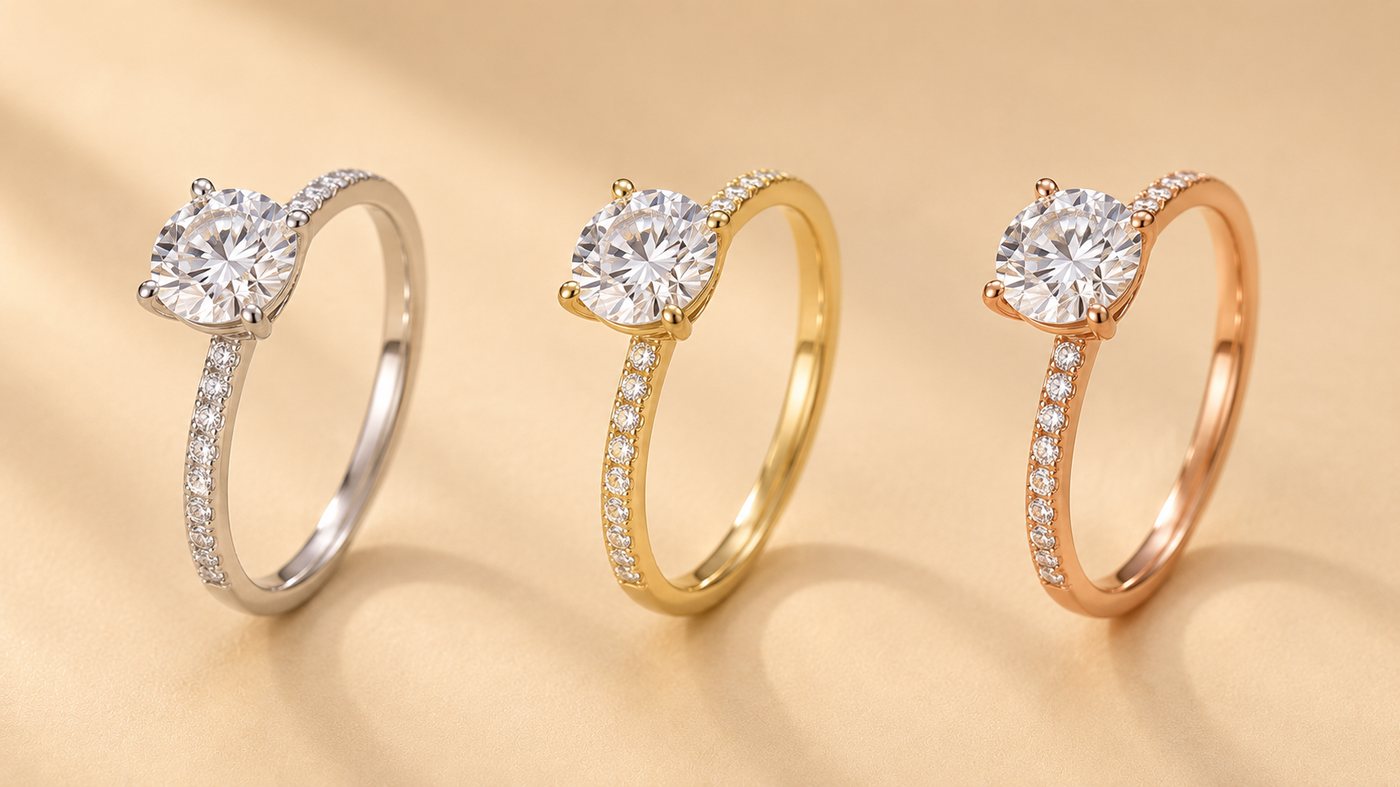
The same stone, three temperatures.
Metal changes the stone more than the stone changes the metal. White golds read cool and make a colourless diamond look colder still; yellow and rose lend warmth that a stone will pick up at its edges.
None of it says where the carbon came from.
Everything on this page applies equally to any lab-grown diamond, ours or anyone else's. Carat, colour and clarity are established by independent laboratory grading, on the same scales used for every other stone. What they cannot show is provenance — that is documented separately, by a sealed chain of custody and a Certificate of Biological Origin, and it is the one thing a grading report will never tell you. How it works sets out that side of it, and the FAQ covers the rest.